Where do you want your picture taken?
A poem by Lorna Crozier
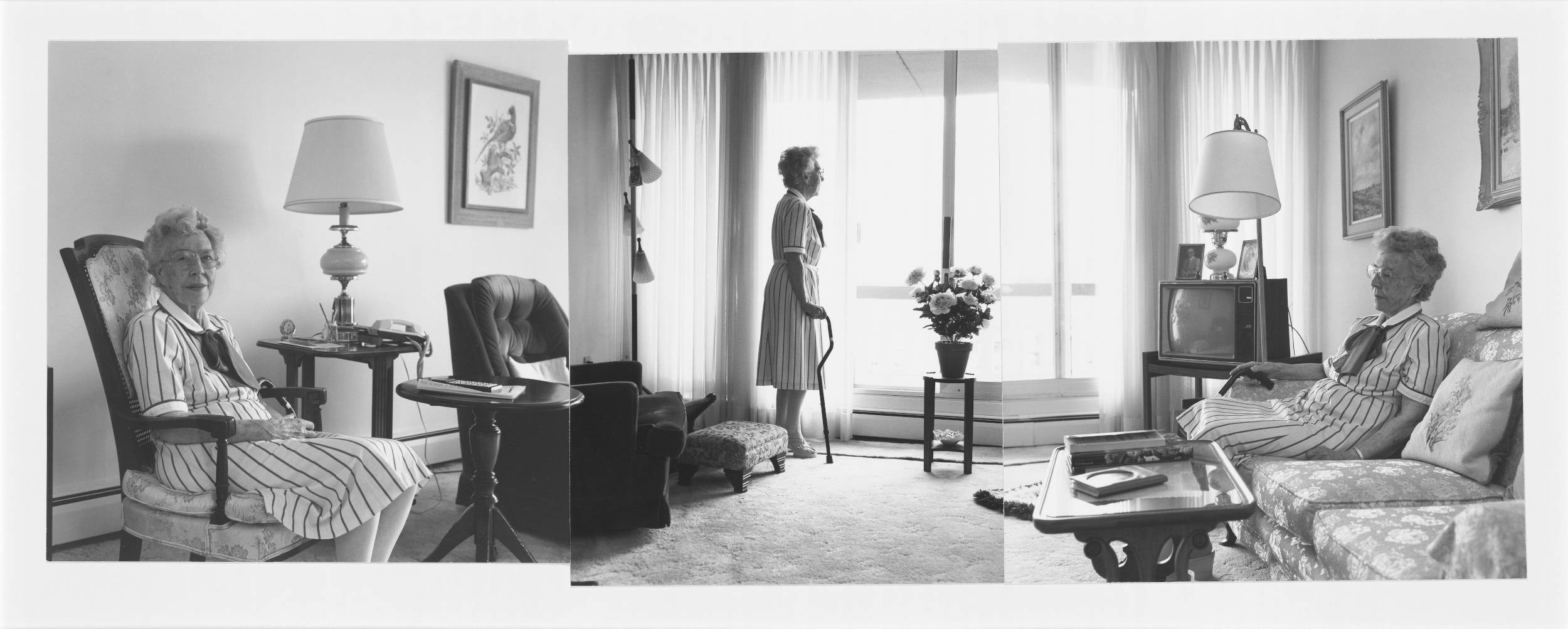
They lived here when they were beautiful,
though they didn’t know it then: one, a girl named Nellie,
rough hands smelling of horse and sunlight,
arms and legs brown as caragana sticks.
Her mother in an apron stood on a small rise,
staring into the dusk draped with smoke to see if the fire
that ravaged the neighbour’s field would shift to the west
or climb the hill and fall
upon the farmhouse where her children waited and watched
her long, straight body turned away from them, darkening
in the setting sun. Nellie said to herself,
"What a lonely figure.”
It startled her—that thought—her mother, rarely alone,
a husband to care for, five kids to raise.
Years after her mother’s death,
after the death of her own husband,
Nellie will live in Saskatoon in a home called Sunset.
In a store-bought dress,
the toes of her pantyhose visible
in white sandals with a decent heel,
she will tell the photographer,
“Those pioneers were carried on the backs of women.”
The children, too, were pioneers, though it’s older people
in dusty wool we think of when we hear that word,
not the six Wilcox kids who each had to pump a hundred strokes
to fill the trough before they went to school,
their mother finishing the job, the geldings pushing at the gate.
Not eleven-year-old Olesa Guttormson and her sister
who got up at 5 a.m. to wash
the office and rooms at the Watson Hotel.
“We didn’t get very much school because we didn’t go to school. We worked.”
In the photograph, Olesa sits in her wheelchair,
feet swollen in cloth slippers. Most beautiful,
she holds a harmonica to her lips.
The picture’s titled: “Olesa Loves Music.”
My own mother, seldom photographed, was kept from grade one
so she could clean the outhouse, wash the floors, bake loaf after loaf
of bread at the neighbours’ farm.
Too short to pound the dough on the kitchen table, she stood
on a milking stool.
She milked, too.
Most beautiful she was
in the snapshot I keep on my desk. On her eightieth birthday
her friends threw her in the outdoor pool, her eyes
bluer
than the water. They carried that colour and shine
for eight more years before I had to close them, kissing each eyelid
and then both temples where they dipped just above the cheekbones
as if a thumb had pressed there when the clay was wet.
On the farmsteads that branched off the grid,
sheds, coops, and granaries settled in the grass
when there was grass, in the dust
when there was not.
Sometimes the barn was part of the house—in bed, half asleep, you could hear
the milk cow shifting in the straw, smell the urine and manure,
hear the sow’s deep sigh as she
settled into sleep, the warm sound of the piglets’ sucking—
or the barn was its own building big as a wooden ship
turned upside down for repairs,
two houses could easily fit inside it.
No trees at first, then
a shelterbelt planted on three sides,
caraganas, elms, sometimes spruce.
There was a well and a pump. A trough,
an iron plow, wagon wheels. There were shattered
whiskey bottles, leather harnesses, a wooden laundry tub,
the bleached bones of cows by the slough,
a dirt road the feet remember, long before gravel,
the soft sound the earth made beneath them.
When it rained the road turned to gumbo. You couldn’t drive it
with a horse and wagon, just a horse, its big hooves sinking in and
sucking up the mud
like rubber plungers. Each farm was plotted on a map,
its site and township. Yet passing through, you’d swear they were
the same farm,
the villages, too, though the people differed
in their countries of origin, their family names—little else
to claim.
Hail that shattered the south windows
made a U-turn in the wind and hours later
broke the windows to the north. You’ll hear this story
in a dozen places. The dates change
but the damage done remains the same.
Everyone lost, everyone struggled
though many said they were never hungry, never cold.
It was a woman’s lot
to marry and have children, to bury those she loved and keep on going,
“always something, a kettle of soup—
something hot on the stove.”
Once there was a high school, once a blacksmith’s shop, once a café,
once a town hall,
once the mail came here, crossing open country and an ocean,
then thousands of miles again. Did a letter from Norway arrive, from
Devonshire, from China?
Were there any kin left to send one?
Three brothers killed during the revolution, a sister dead
from typhoid fever.
Imagine a letter from Nabor, Southern Russia, following the trail
of the family who’d escaped, who’d settled in a town
with a postmistress, a store, the beginning
of a school. No matter what it said,
they’d have saved the letter, placed it perhaps
beside the samovar, the small blue vase,
what they’d brought to Saskatchewan in 1923.
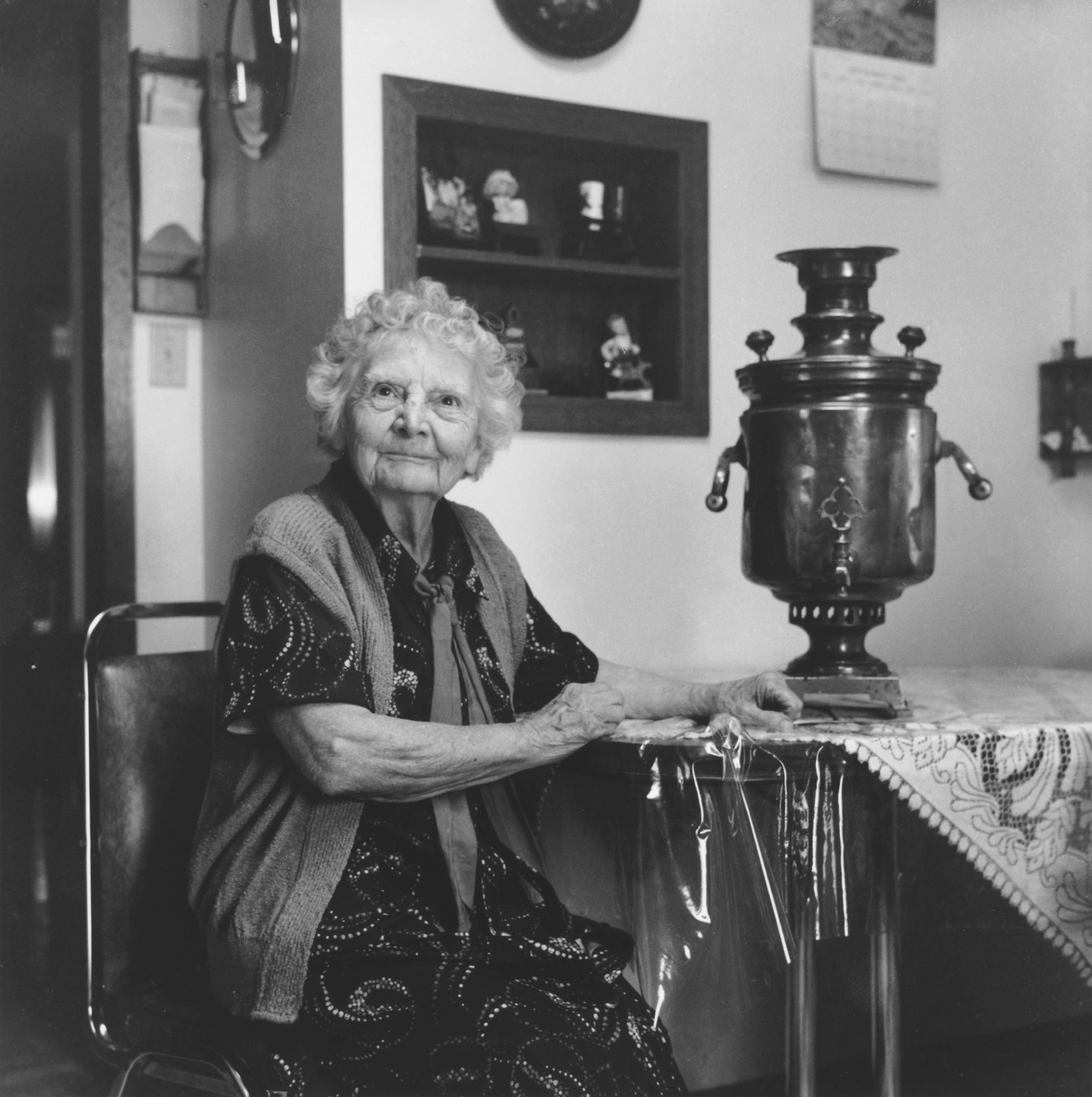
In her room at the home called Sunset, Anna at eighty-five
poses with such a samovar. The length of her torso, it dominates
the chrome table covered with a lace cloth, plastic laid on top to keep
the lace clean.
When asked where
she’d like to be photographed, she wants to go back
to the home place where no one lives anymore.
Small but not insignificant, not out of place
she stands in front of the wind-scoured house
Clutching a shawl in one hand, a cane in the other, she isn’t smiling,
but gazes past the photographer, chin slightly lifted,
the wood in the siding and the door close behind her
give off the silver gleam of daguerreotypes, her face, too,
has that strange shining, the expression hard to read.
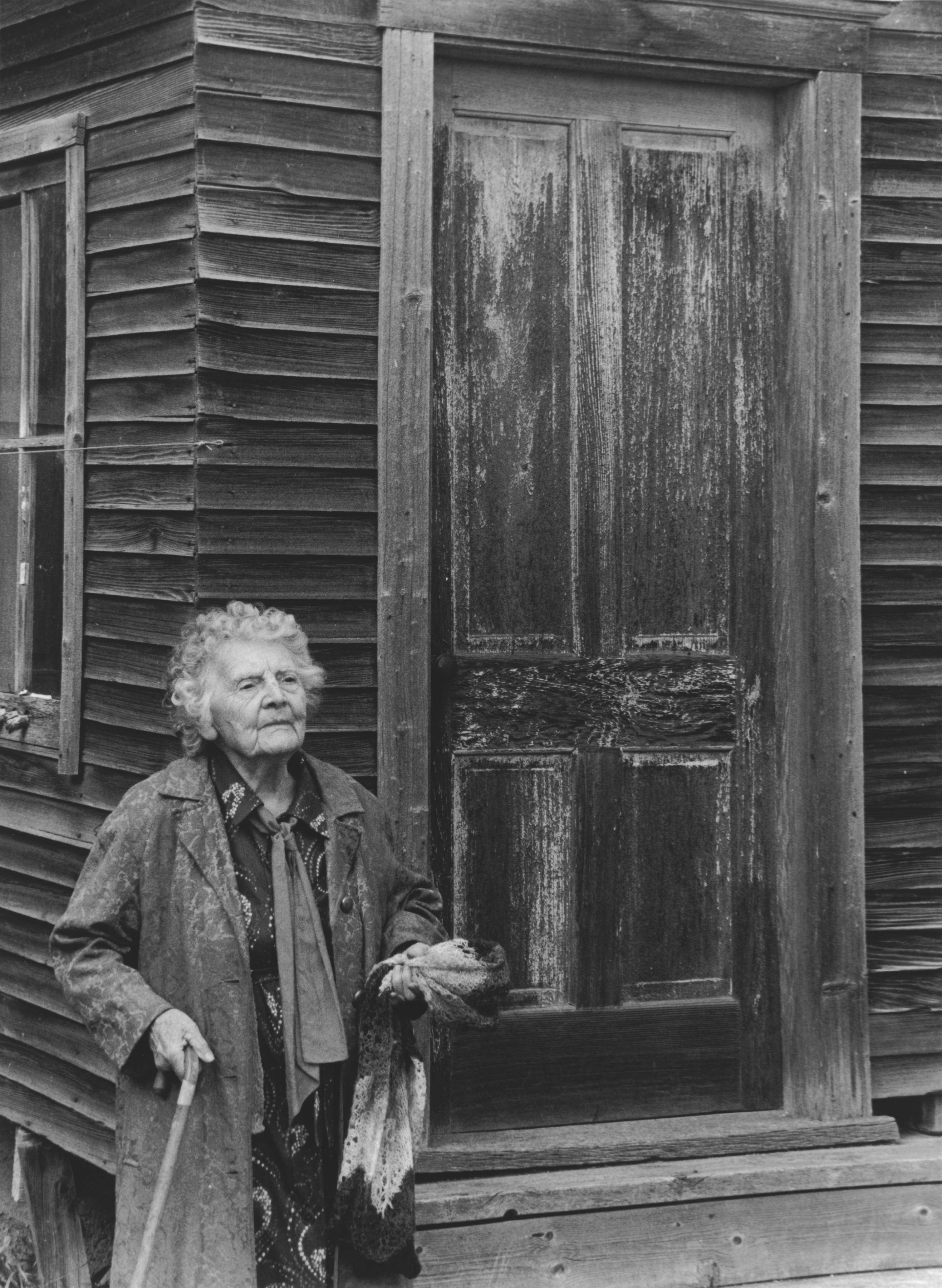
This is where you stand when you are old.
It must be a cool day, but not too cold.
Her hands and head bare,
she is fully in her body in this place
another would call desolate; another, sad.
This is the picture she wants us to see.
There was a family, feet running up
the three steps to the door.
There were animals
they killed to eat.
There was a cat who hid its kittens.
Stubble crackled like small fires beneath their shoes
as they ran across it.
This is what her look says,
This is what her look says,
this is what it makes us witness:
what never leaves the world is loss.
Where would I want my picture taken?
The windmill is more accurate than a clock.
Look how fast its blades spin.
Ida Hogel says she can’t believe it. “My oldest girl is 71.
How old am I? I must be going backward.
I must be 49!” And she laughs. She laughs
as the strong wind pushes her backwards
down the road she’s travelled
but now what’s ahead is a darkening
that is not yet dark,
something that’s seen
only in that narrow space between
the sun’s last shining and its going down,
the shutter open, then clicking shut.
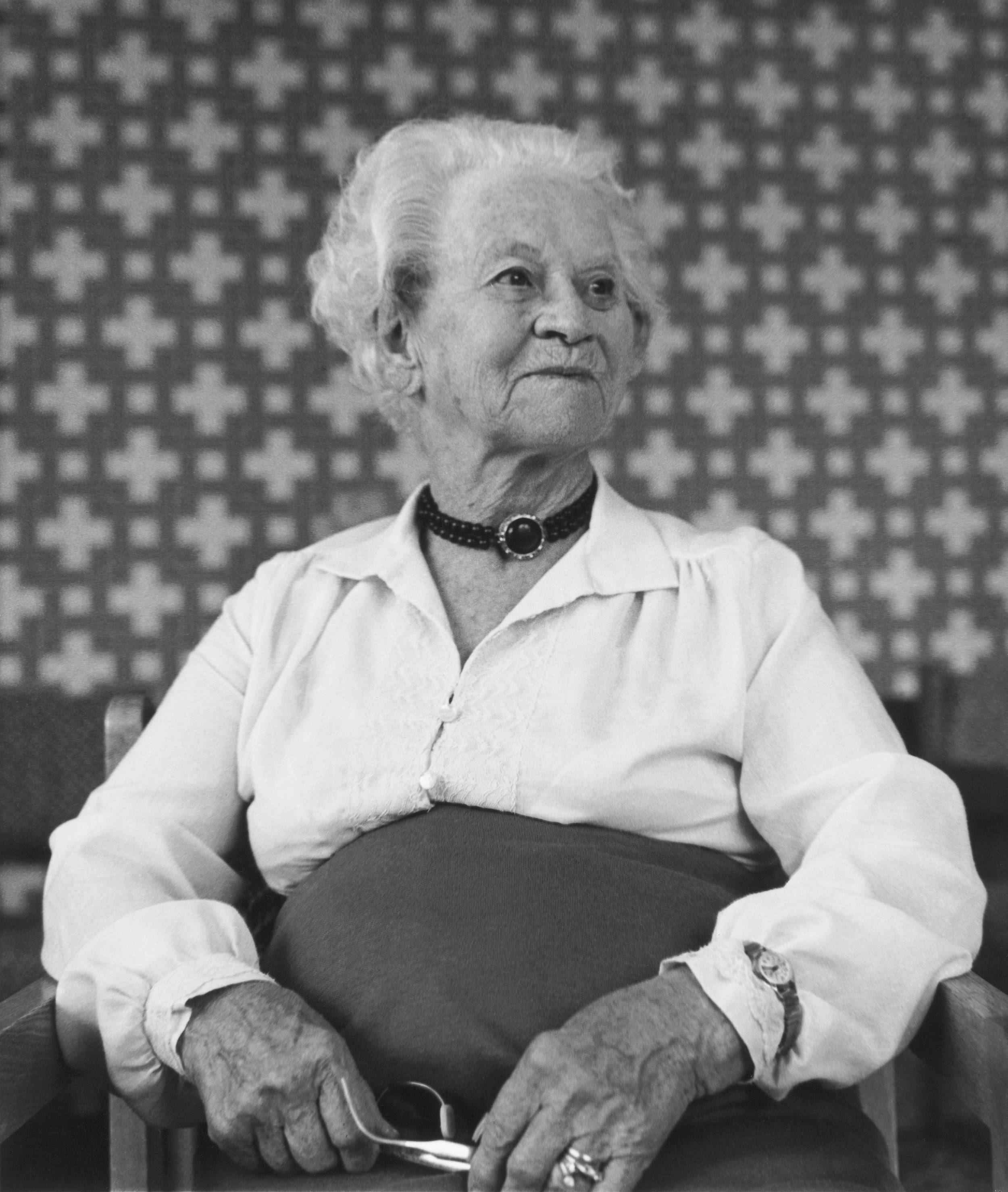
Ida wears a wristwatch, easily read, on the cuff of her blouse
as if, at any moment, she might be called upon
to take a pulse.
In this country wind feeds the quickness of things.
Fire eating the grass,
a barn’s lean, the fading of names painted
on storefronts, on a wooden cross, on grain elevators:
wind hastens the ageing of the face and hands.
Off Highway 41 there is a village called All Things Pass, and a village
called Bewildered, and a village called Time Blows Through.
They are the same village and they are different.
Who, you wonder, used to look out those windows?
Long ago a woman watched for a car to drive up the road
with its tail of dust,
longer ago, a horse and buggy,
longer ago, the shape of a tired man, walking.
There was a dress a woman wore when she cooked and cleaned,
when she plucked the chickens. It was called a house dress.
Usually it had buttons down the front and a print that faded
with each wash.
The other dress she wore to a church service or a wedding, the same
one to a funeral. Sometimes there was enough to buy the end of a bolt
of cotton to make a dress for a dance. There was a time when all she
wanted was to touch
her husband. She wanted him to touch her, too.
You’d be frightened now if you saw a face behind that window,
looking out.
You’d have to make a bargain with the wind so it would help
the ghost pass over.
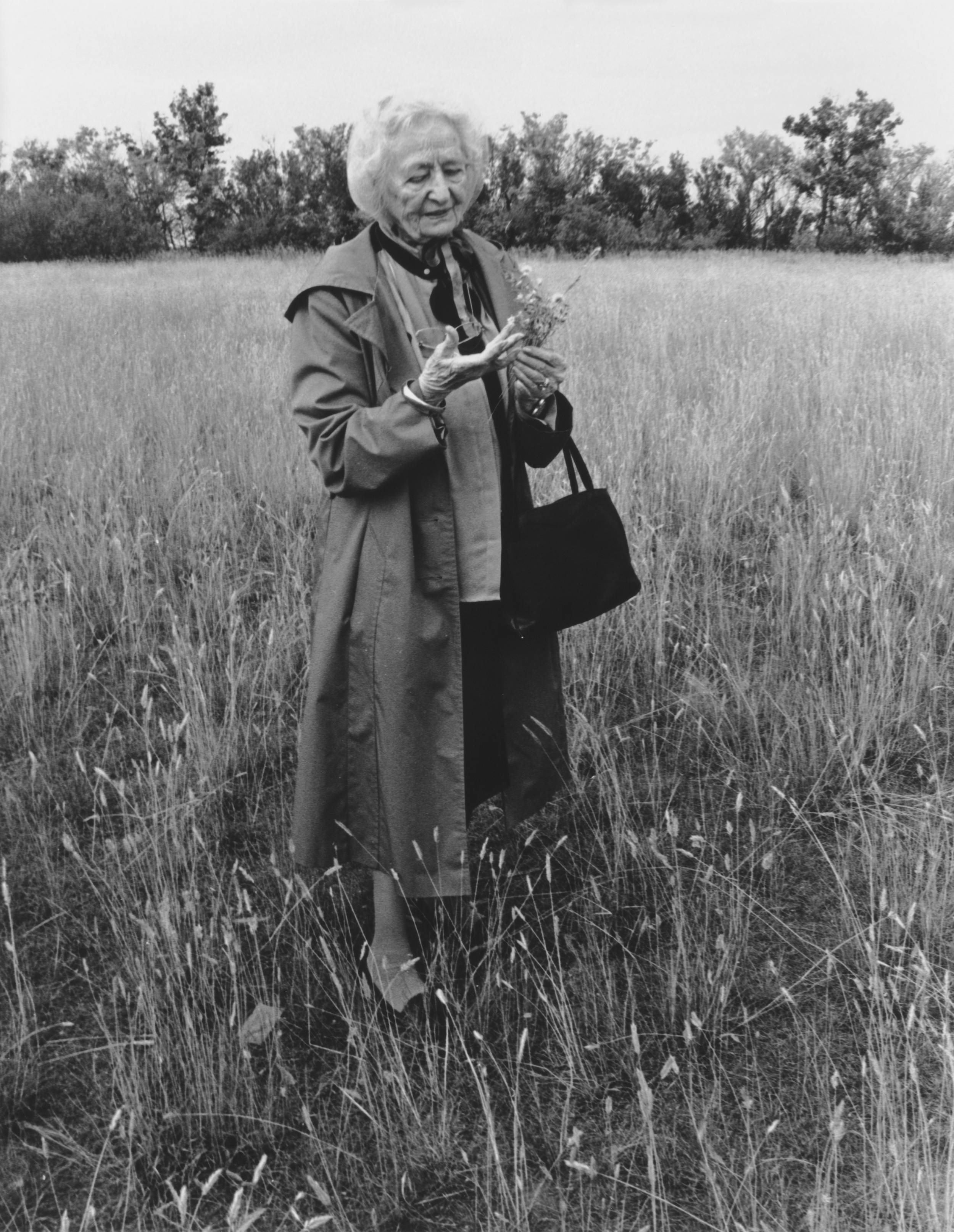
In knee-high grass in the black and white of the photograph
Grace stares at wild flowers and seed-heads in her hand,
the straps of her black purse hooked over one wrist, her coat
unbuttoned. She looks like
the kind of woman who would have excellent
penmanship, a woman who’d know what jewellery to wear
to what occasion. Like Anna, the place she has chosen
is the old homestead, this time a three-story house with perfect
posture, every board intact, keeping the rain away
from the nothing-there
inside. What is strange
is the stillness, the grass that surrounds her doesn’t move
though you know in the world
outside the frame the stems are swaying and the seeds are blowing away.
The photographer, almost seventy, could have been
daughter to the women from the Sunset Home.
Though she never shirked
she’d have liked life
to be sweeter. You can hear that in the titles:
“Memories Come Flooding Back,”
“Strength in Friendship,”
“Thankfulness.”
“No Generation Gap.”
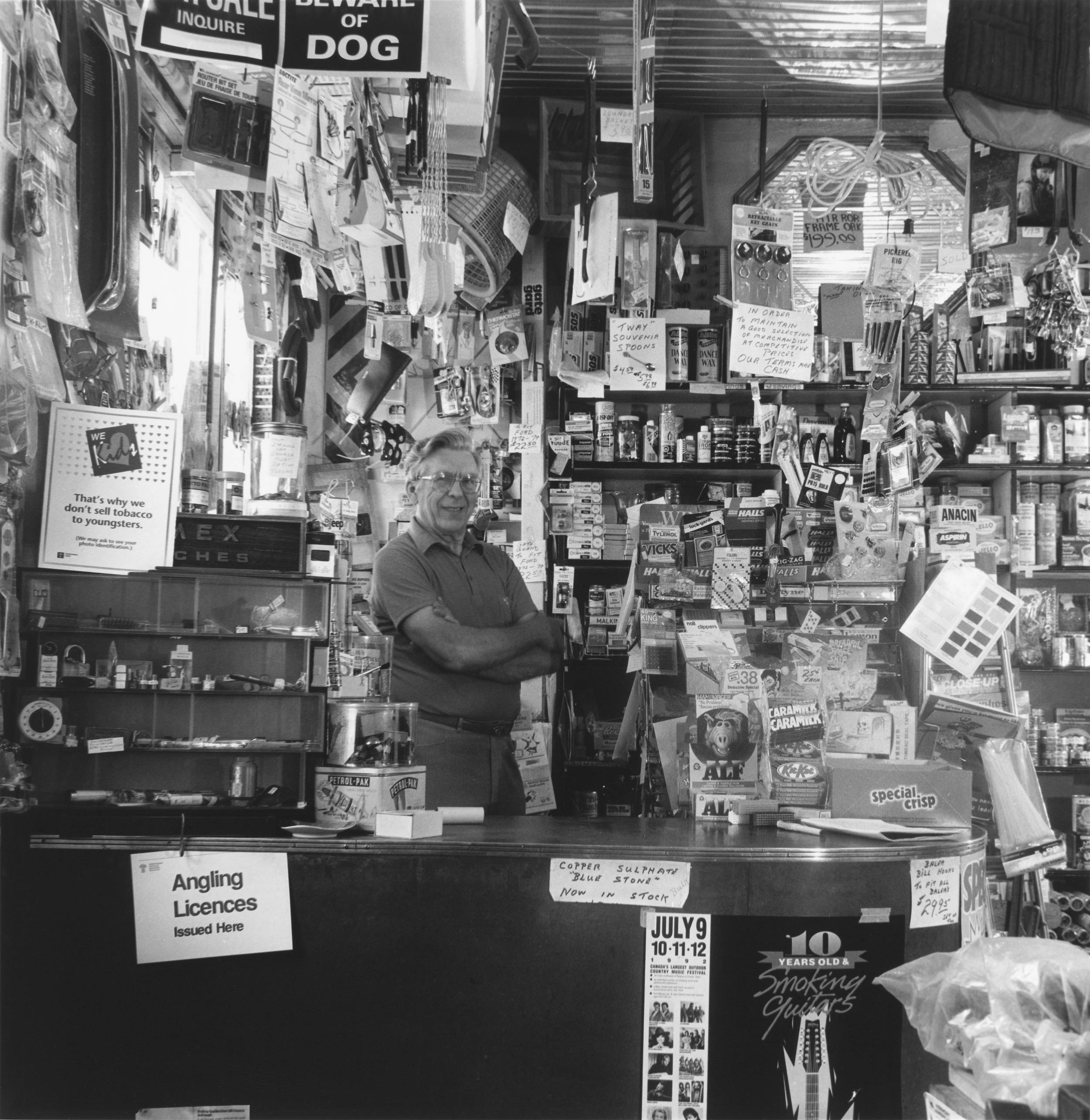
In every village there is a hardware store.
Glue, hammers, egg beaters, salve for horses, Epsom salts,
nails, fly ribbons, paraffin, wooden clothespins, all the small
necessities of daily tasks.
High above the counter, hangs a sign for sale: “of dog”;
the camera has cut off the top line.
You love this accident, or is it mischief?
The missing word bears witness to
what else is missing.
The owner stands behind the counter.
He is smiling. Time and light are running out.
Beware.
Once I would have asked the photographer
to take me to the buffalo stone on the edge of the coulee
on the farm where my mother grew up.
Once I would have asked her to take my picture
in front of the big lilacs that bordered the steps
that led to our first house in town,
but they’ve been torn out, replaced by a hedge
that has no blossoms, no smell.
Like the oils of the Old Masters, the photographs
are layered,
one image on top of another,
pentimento, something hidden underneath.
If you could peel away the thin surface
you’d find what the photographer started with,
the bare face of her seeing—
her features blurred—it leaves you dumbstruck, disquieted—
too much light pouring from her eyes.
In every village there are gardens or plots of weeds
where gardens used to be.
In every village there are prayers for the dead.
Cemeteries and brief narratives carved in stone.
Here numbers carry more meaning than words.
The summer days were long, they still are.
Winter scraped the first layer of skin
from a face. It still does.
A man and a woman reached for each other
in darkness or in the flare of mid-afternoon.
They still do.
The fire continues to move with the wind,
with the breath,
across the sheets.
What is it a fire sees? What does it make of the past,
the ashes it grows out of, the first flicker of memory
of heat and light?
Some women, away from the eyes of midwives and men,
licked their newborns like cats. Some licked the sweat
on their husbands’ bellies. Some chewed
kernels of wheat, touched the sweetness of
caragana stamens with the tips of tongues.
It was yesterday and tomorrow.
The windmill turned and turned,
water pouring into the trough, into the dugout,
the big animals gathering.
“Thankfulness.”
For the photograph, Olessa didn’t choose the Watson Hotel
where, in the early mornings,
she and her sister scrubbed away the evenings’ sins.
My mother wouldn’t have chosen
the farm where she grew up.
At 88, she’d have stood in front of the camera
in her Swift Current garden, mid-July,
among the pea vines, potatoes to either side,
enough to get her through the winter,
though she wouldn’t live to see that winter come.
There was rain and there was no rain.
Wood stoves, hot all over, burned arms and hips;
the scars remained, pits in the face from smallpox,
cuts from mower blades and butcher knives
when the pigs were slaughtered.
The cream separator became a planter, the coal oil lamps
novelties in a musty store. The word “pioneer” vanished
with the draft horses, the family bibles, the threshing crews.
Few were held back from school.
Whole towns died. Whole towns moved away.
Who is looking out the window now?
Who takes a picture of the picture taker?
Where are the buffalo that circled
the buffalo stone, scratching their matted backs?
I won’t pose there now. The grandchildren of my aunt
who stayed on the farm
painted her name on the granite. In the wallow
they planted plastic lilies and propped against the stone
three troll dolls with flaming hair.
Sorrow has entered the pictures.
Sometimes it’s in the face, sometimes
it’s in something as inconsequential
as a bottle of lotion by the bathroom sink.
If the camera captures souls
what about the animals who once lived in the village,
who worked on the farm? The horses named Dolly and Bill,
the black-and-white collies, the barn cats. When you look closely
at the long grass caught in the lens, do you glimpse a tail,
the tall grass hallucinating hooves and paws,
sending out to those who cannot see
the afterglow of the nowhere-to-be-found,
the once beloved,
passing through.
The photographer at ninety
begins to compose her self-portrait. She wants
the camera to pull her into the gravity
of her whole and only being.
She must use a timer, she must move quickly.
There must be nothing in her way; there must be everything.
It is her own eye she stares into. It must be empty enough
to take what it’s been given—grief, amazement,
the invisible, astonishing breath…
The wind puts its lips to Olesa’s harmonica,
composes an oratorio for old women,
for the boarded-up
hardware store, the blacksmith’s, the village hotel,
for the vacant lot where the garage used to be.
Everything the wind speaks to
answers back.
What happens to a life?
Where are the grass seeds blown from an old woman’s hand
over twenty years ago?
Where, after all, do you want your picture taken?
You must tell me now.